AI job search for directors, VPs and executives
Partly. Applier can handle the advertised half of a director, VP or executive search: it finds posted roles at your level, applies on each company's own careers site and writes to people on the hiring team from your personal Gmail. It does nothing for the other half, the searches a board or a retained firm runs privately and never posts. If you go in knowing that split, it saves you the form-filling and puts your name in front of someone at each company; if you expect it to replace search firms and your network, it won't.
What is and isn't advertised
Plenty of leadership roles are posted publicly: heads of function, directors and VPs at companies that hire through their own recruiting team, and executive roles at firms too small to retain a search firm. The US Bureau of Labor Statistics projects about 304,100 openings for top executives each year over 2025 to 2035, many of them to replace people who move on or retire. Applier only sees the ones that reach a job listing. Nobody outside a private search can tell you what share that is, and we won't guess.
Setting up an executive search
- Level: choose "Director / VP / Executive", and say whether a role one level down is acceptable.
- Titles: name up to five, such as "VP Engineering", "Head of Product", "Chief of Staff". Use the exact-title option for titles that mean something junior elsewhere.
- Compensation floor: set a minimum annual base salary. The floor is compared with the pay a posting states, so set it on base, not on total compensation.
- Exclusions: list your current company under every name it trades as, plus anywhere a conflict or a past role makes an application awkward.
- Your note: write the mandate you want in two sentences, for example "P&L ownership, Series C or later, no turnarounds". It is read against every posting.
- Mode: stay in Review. At this level you should read each job before your name goes on it.
Discretion
A senior leader's search is usually confidential. Four things in Applier help, and one doesn't.
- It runs on Applier's servers, away from your work computer and network.
- Employer email goes to a private application address Applier gives you, or to a personal Gmail if you prefer; never use a work account.
- In Review mode no application and no email leaves without your approval, and you see exactly who an email is addressed to first.
- Matching, applications and emails can each be paused separately, for instance while an internal process plays out.
What it can't do is keep a company from learning you applied to it. An application is a disclosure to that employer. If a company's leadership knows yours, exclude it and approach it yourself.
Applications at this level
Leadership roles are advertised on every kind of system: a private-equity portfolio company's one-page form, a listed company's Workday site, a founder's careers page. Applier applies on the employer's own form in each case, and isn't restricted to a set of supported systems. Your resume is tailored to the posting without dropping any role you've held, and a cover letter is written for that company. Forms may ask about compensation expectations, notice period and willingness to relocate; where you haven't given an answer, Applier supplies one and puts it in Answers to check, where your correction becomes the answer used from then on. Read that list before the first applications go.
A direct introduction to the hiring team
After each submitted application Applier identifies people on the hiring team and drafts a brief introduction to each, sent from your Gmail with your resume attached. Max covers three people per application, Pro two, Starter one. Two follow-ups go in the same thread and stop when someone answers. Because you approve each one in Review mode, you can decline the introduction and write your own when you know the recipient. The guide on whether to write to the hiring manager or the recruiter applies here as well.
How to use it alongside everything else
- Let Applier cover posted roles, so a relevant opening doesn't pass while you're busy.
- Keep your own time for search firms, former colleagues and boards. Those channels are closed to software.
- Use the interview pack that comes with each submitted application as a starting brief on the company and role.
Managing a team but not yet at director level? See senior, lead and manager roles. The feature list has everything Applier does, and pricing shows what each plan includes.
More auto-apply guides
- Auto-apply to jobs that can sponsor your visa
- AI that applies to entry-level jobs for new grads
- Auto-apply to jobs when you're changing careers
- All auto-apply guides
Real interview invites from members' inboxes
See more interview invites →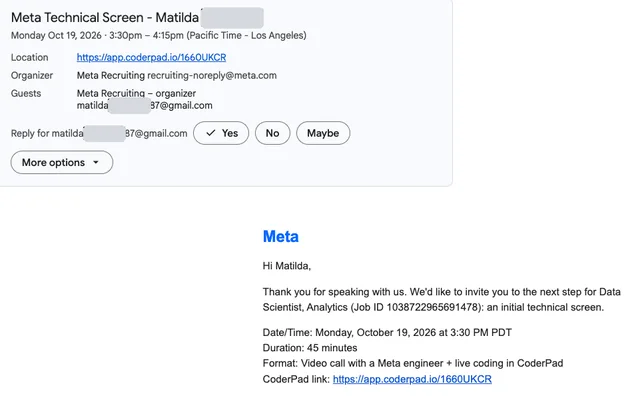
 Meta
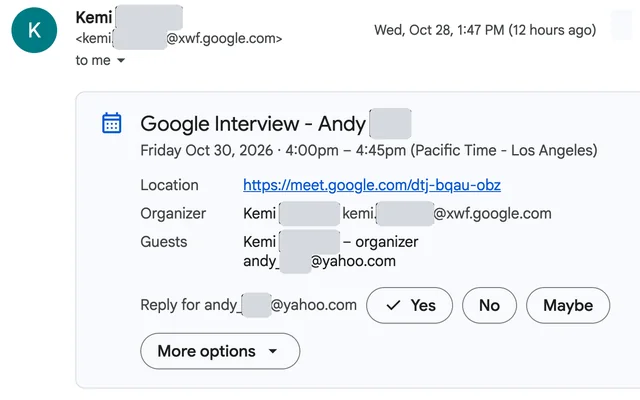
 Google
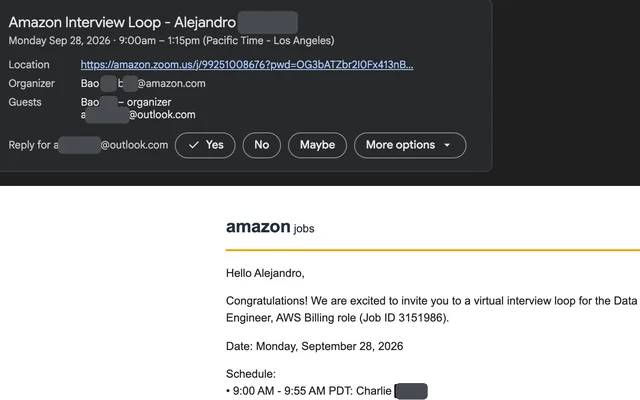
 AWS
Frequently asked questions
Does Applier work for executive job searches?
For the advertised part. Applier finds posted director, VP and executive roles, applies on the employer's own site and emails people on the hiring team. Searches run privately by a board or a retained search firm aren't posted, so Applier can't reach them.
Can I keep my search confidential?
You can keep it away from your employer: exclude your company by every name it uses, use a personal Gmail, and stay in Review mode so nothing is sent without your approval. An application does tell that employer you applied, so exclude any company you would rather approach yourself.
Who does Applier email for a senior leadership role?
People it identifies on the hiring team for that role: 1 per application on Starter, 2 on Pro and 3 on Max. In Review mode you see each recipient, subject and message, and approve or decline it before anything is sent.
Sources
- Top Executives, U.S. Bureau of Labor Statistics, Occupational Outlook Handbook, 2026