AI that applies to entry-level jobs for new grads
Yes. We apply. You interview. Applier is an AI job application service that applies to entry-level jobs for you. We find open roles that match your degree and what you're looking for, tailor your resume and cover letter to each one, and submit the application on the employer's own site. Then we email the hiring manager from your Gmail. That removes the slowest part of a new-grad search: retyping the same details into one employer form after another. You stay in control of what goes out.
What the new-grad market looks like
The numbers are mixed, and both sides are worth knowing. NACE's Job Outlook 2026 Spring Update reports that employers expect to increase new college graduate hiring from the Class of 2026 by 5.6%. At the same time, the Federal Reserve Bank of New York says labor market conditions for recent graduates improved in the third quarter of 2026 but remained challenging, with an unemployment rate of 5.2 percent and an underemployment rate of 42.5 percent. Both describe the United States. In other countries the mix differs, but the shape is the same: more openings than a year ago, and still a lot of competition for each one.
When most graduates apply to dozens of roles with the same resume, the ones who get replies tend to be the ones who sent more applications and made each one fit the ad. That's hard to do by hand alongside coursework, a final project or a part-time job.
What Applier does for a new grad
- Starts from your questionnaire. You give it the roles you'd take (up to five job titles, plus titles to avoid), where you'll work, remote or not, your minimum salary and your work authorization, and you upload your resume. If your experience is mostly coursework, internships and projects, that's what it works from.
- Finds entry-level matches. It keeps checking new roles against your profile and labels each match a strong match, a stretch or a related role. Stretches matter when you're starting out: many first jobs are in a field next to the one you studied.
- Tailors each application. Your resume is matched to the job ad's wording and a new cover letter is written for the role. It reuses facts from your resume; it doesn't invent experience. The guide to tailoring a resume to a job description explains the line between matching wording and making things up.
- Applies on the employer's own site. Applier fills in and submits the application on the employer's own application form, never through a job board's quick-apply button, so it never needs your job-board accounts. It runs on its own servers, so it keeps going while your computer is off.
- Emails the hiring manager. After an application is submitted, Applier finds people on the hiring team and writes each a short introduction from your Gmail, with your tailored resume attached. Follow-ups are scheduled 3 and 7 business days later and stop as soon as someone replies.
Start in Review mode
You don't have to hand over control on day one. Applications have three modes:
- Review: you approve each job before Applier applies. A good place to start: you see what it picked, why it fits, and the resume and cover letter written for it.
- Hybrid: strong matches go on their own and stretches and related roles wait for you.
- Auto: every match goes on its own, strong matches first.
Introductions to hiring managers have their own modes and start in Review, so you read each email before it goes out. Since an email to a hiring manager is a first impression, most new grads keep that in Review for a while.
Answering questions you haven't met before
Entry-level applications often ask more than a resume covers: graduation date, GPA, work authorization, notice period, how you heard about the role. Applier answers from your profile. When an application asks something you haven't answered, it fills in an answer and lists it under Answers to check, so you can confirm or correct it. After that, Applier uses your answer. Your answers build into a library you can add to and edit in your dashboard, so the second application is faster than the first.
What a realistic first week looks like
- You answer the questionnaire and upload your resume. Applier tidies it into a standard format that applicant tracking systems read well, and you preview it before it replaces your current version.
- You see a sample resume and cover letter tailored to one matching job, then choose how to start.
- Applier works through matches. In Review, you swipe or use the keyboard to approve, decline or skip.
- Applications go out, and each one shows where it stands in your dashboard, including Failed with the reason when one couldn't be finished.
- Replies and interview invitations show in your Inbox, labelled automatically, so you see them without searching your email.
How many applications it takes to get an interview varies a lot by field and by market. The guide to how many applications it takes to get an interview shows what the evidence says and why a single number is misleading. Applier doesn't promise a result: it increases how many good-fit applications you send and how well each is tailored.
What still needs you
- Applications go out in your name, so keep your resume and profile accurate.
- Prepare for the interviews you get. Applier can generate an interview pack for any submitted application, with the role at a glance, likely questions and suggested answers drawn from your resume.
- Even in Auto, a match waits for you when Applier can't confirm it fits a rule you set, for example an industry you asked to avoid.
For the full process, see how Applier works. Plans and prices are on the pricing page, and every new member starts with a free trial.
More auto-apply guides
- Auto-apply to jobs when you're changing careers
- Job hunt while employed: let AI apply for you
- Auto-apply on an H-1B: jobs that accept a transfer or will sponsor
- All auto-apply guides
Real interview invites from members' inboxes
See more interview invites →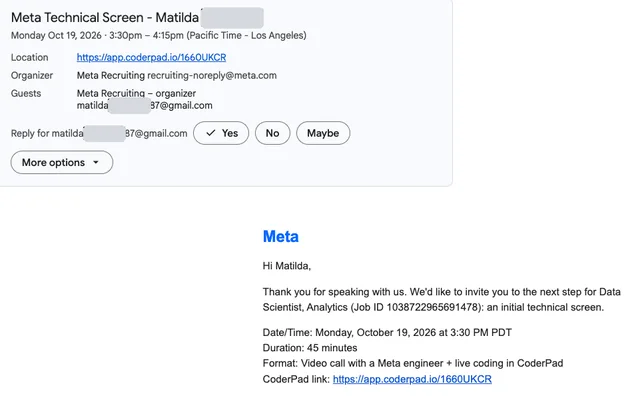
 Meta
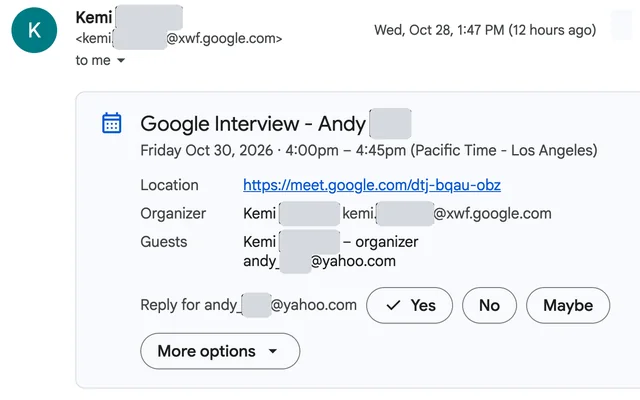
 Google
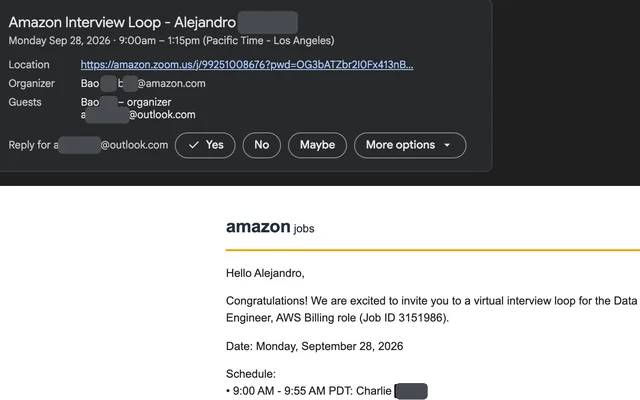
 AWS
Frequently asked questions
Can a new grad with little experience use Applier?
Yes. Applier works from the resume and answers you give it, including coursework, internships and projects, and labels each match a strong match, a stretch or a related role. You can start in Review mode and approve each job yourself.
Will Applier invent experience on my resume?
No. It tailors your resume and writes your cover letter from what is on your resume, using the job ad's wording only where it describes work you have done. Applications go out in your name, so keep your resume accurate. See the guide to tailoring a resume to a job description.
How many applications does it take to get an interview?
It varies by field and by market, and no number is guaranteed. Applier increases how many well-fitting, tailored applications you send; the guide to how many applications it takes to get an interview explains what the evidence shows.
Sources
- Job Outlook 2026 Spring Update: employers expect to hire more new college graduates, National Association of Colleges and Employers (NACE), 2026
- The Labor Market for Recent College Graduates, Federal Reserve Bank of New York, 2026