What US job ads say about visa sponsorship
About one in five US job ads says outright that it is closed to people who need a work visa. In 8,882 US job ads that Applier read between 17 September and 12 November 2026, 18.6% said the employer won't sponsor or that you must already be authorized to work in the United States, 0.8% accepted H-1B transfers only, 0.7% offered sponsorship, and 79.8% said nothing about visas at all.
What the ads said
| What the ad says about work visas | Ads | Share |
|---|---|---|
| Nothing | 7,092 | 79.8% |
| No sponsorship, or you must already be authorized to work | 1,650 | 18.6% |
| Existing visa holders only, such as H-1B transfers | 75 | 0.8% |
| The employer will sponsor, or may | 65 | 0.7% |
Three things stand out.
- Silence is the norm. Four ads in five don't mention visas. Of the 2,653 employers in the sample, 1,998 (75%) said nothing in any of their ads. An ad that is silent has not said yes: the question usually arrives later, on the application form.
- A stated yes is rare. Only 65 ads from 17 employers offered sponsorship, and many of those hedged it with wording such as "case by case" or "for exceptional candidates".
- Transfer-only ads come from very few employers. Twelve employers posted all 75 of them, and one employer posted 53.
Separately, 8.5% of the ads required US citizenship, permanent residence or a security clearance. Those roles are closed to visa holders whatever the ad says about sponsorship.
By type of role
The table groups ads by job title and lists every group with at least 100 ads, from the highest share that rules out sponsorship to the lowest.
| Role | Ads | Rules out sponsorship | Transfers only | Offers sponsorship | Says nothing |
|---|---|---|---|---|---|
| Civil and structural engineering | 110 | 40.0% | 0% | 0% | 60.0% |
| Product management | 457 | 24.5% | 0% | 1.1% | 74.4% |
| Data engineering | 1,470 | 23.6% | 0.9% | 0.5% | 75.0% |
| Project and program management | 434 | 23.3% | 0.7% | 0% | 76.0% |
| Software engineering | 2,509 | 22.7% | 1.7% | 1.6% | 74.0% |
| Sales | 573 | 18.2% | 0% | 0% | 81.8% |
| Machine learning and AI | 608 | 17.1% | 2.1% | 1.8% | 78.9% |
| Finance and accounting | 189 | 15.9% | 0% | 0% | 84.1% |
| Design | 198 | 13.6% | 0.5% | 0% | 85.9% |
| Customer service and support | 174 | 12.1% | 0% | 0% | 87.9% |
| Data analysis and science | 1,130 | 12.0% | 0.2% | 0% | 87.8% |
| Marketing | 109 | 9.2% | 0% | 0.9% | 89.9% |
| Data entry | 656 | 0.8% | 0% | 0% | 99.2% |
Engineering, data engineering and product roles state a visa position most often, in both directions: they have the highest refusal shares among the large groups and almost all of the offers. Software engineering and machine learning are the only groups where more than 1.5% of ads offered sponsorship. Data entry ads almost never mention visas, and the small groups (design, finance, marketing, civil engineering) move a lot with a handful of employers, so read those rows as rough.
By employer industry
The same ads grouped by the industry shown for the employer, for industries with at least 100 ads.
| Employer industry | Ads | Rules out sponsorship | Offers sponsorship |
|---|---|---|---|
| Insurance | 170 | 28.8% | 0% |
| Technology, Information and Internet | 1,391 | 27.5% | 0.2% |
| Business Consulting and Services | 175 | 25.7% | 0% |
| Staffing and Recruiting | 363 | 22.0% | 0% |
| Financial Services | 347 | 19.6% | 3.2% |
| IT Services and IT Consulting | 613 | 18.3% | 0.3% |
| Hospitals and Health Care | 297 | 18.2% | 0% |
| Advertising Services | 102 | 14.7% | 0% |
| Software Development | 2,119 | 14.5% | 1.5% |
| Computer and Network Security | 151 | 12.6% | 2.6% |
| Construction | 1,214 | 5.1% | 0% |
Financial services, computer security and software development are the only industries here where more than 1% of ads offered sponsorship. Staffing firms and consultancies ruled sponsorship out more often than software companies did.
What this means if you need sponsorship
- Read to the end of the ad. The visa line often sits near the end, beside the equal-opportunity statement. The guide to sponsorship wording in job ads lists the phrases and what each one means for H-1B, OPT and other statuses.
- Don't treat silence as a yes or a no. Most employers say nothing, and that tells you nothing about whether they file petitions. Check the employer's record instead: the free H-1B sponsor lookup shows how many H-1B workers USCIS approved for an employer in each fiscal year, including transfers.
- Expect the question on the form. "Will you now or in the future require sponsorship?" is a standard question on application forms, and it can appear even when the ad never mentioned visas. Answer it truthfully; an OPT student who will later need an H-1B answers yes.
- Skip the stated refusals. At roughly one ad in five, filtering them out before you tailor a resume saves real time. Go after employers whose history shows filings, and ask early.
About the data
The figures come from job postings only and include no customer data. They cover US listings posted between 17 September and 12 November 2026 that Applier had already read for visa wording, which it does for listings found through searches for remote roles. That makes this a sample of what Applier's members were searching for, weighted toward software, data, product and sales roles and toward jobs advertised as remote. It is not a sample of the whole US job market.
Applier read 12,228 such listings. Where one employer posted the same text more than once, for example in several locations, it is counted once, which leaves 8,882 ads from 2,653 employers. The ten largest employers account for 29.7% of the ads, and the largest single contributor to the refusals posted 218 of them.
Each ad was sorted into one of the four answers by Applier's matching step, which reads the ad's text. An automated reading makes mistakes. An ad that only says "must be authorized to work in the United States" is counted as ruling out sponsorship, because the reading treats a requirement to be authorized already as no sponsorship. Role groups come from keywords in the job title, and industries from the employer's industry as listed.
How Applier handles this
You tell Applier your work status and whether you need sponsorship. It leaves out roles whose ads rule you out, answers the sponsorship question on each form from what you set, applies on the employer's own site and then emails the hiring manager from your Gmail. It has no record of which employers have sponsored before, so use the lookup for that. More in auto-applying on an H-1B and on OPT and STEM OPT.
Related guides
- Visa sponsorship wording in job ads: what each phrase means
- Ghost jobs by industry: how many job listings are stale?
- How many applications does it take to get an interview?
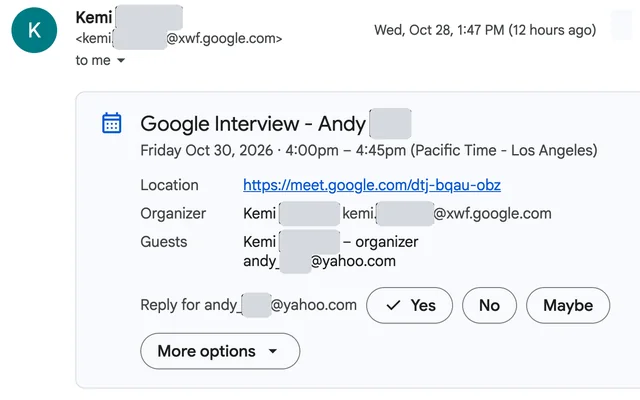
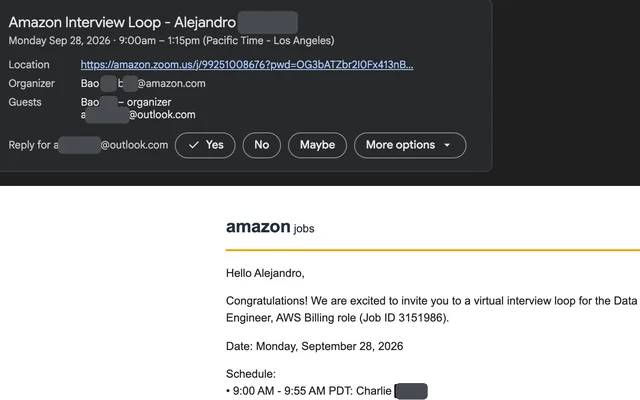
Real interview invites from members' inboxes
See more interview invites →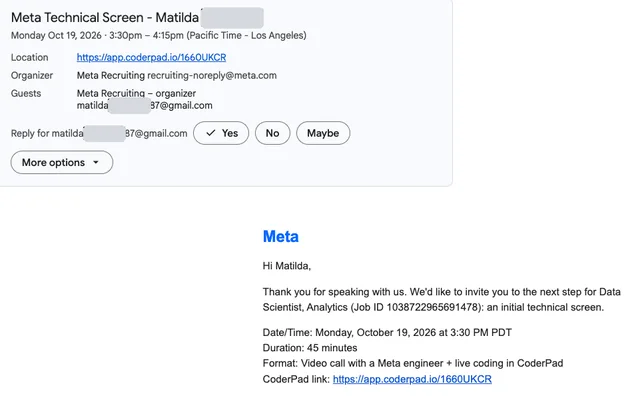
 Meta
 Google
 AWS
Frequently asked questions
What share of US job ads say they won't sponsor a visa?
In Applier's sample of 8,882 US job ads posted between 17 September and 12 November 2026, 18.6 percent said the employer won't sponsor or that candidates must already be authorized to work in the United States. Another 0.8 percent accepted existing visa holders only, 0.7 percent offered sponsorship and 79.8 percent said nothing about visas. The sample leans toward software, data, product and sales roles advertised as remote.
Which roles most often rule out visa sponsorship in the job ad?
Among role groups with at least 400 ads in Applier's sample, product management (24.5 percent), data engineering (23.6 percent), project and program management (23.3 percent) and software engineering (22.7 percent) ruled it out most often. Data analysis and science roles did so in 12 percent of ads, and data entry ads almost never mentioned visas.
If a job ad doesn't mention sponsorship, does the employer sponsor?
You can't tell from the ad. About four in five ads in Applier's sample said nothing, and three in four employers said nothing in any of their ads. Check the employer's filing history in USCIS's H-1B Employer Data Hub, and expect the application form to ask whether you will require sponsorship now or in the future.
How many job ads offer H-1B sponsorship?
Very few say so in the ad. In Applier's sample, 65 of 8,882 ads (0.7 percent) from 17 employers offered sponsorship, often with conditions such as case by case, and 75 ads (0.8 percent) from 12 employers accepted H-1B transfers only. What an employer has actually filed is a better guide than its ads, and USCIS publishes that by employer and fiscal year.
Sources
- H-1B Specialty Occupations, U.S. Citizenship and Immigration Services, 2026
- H-1B Employer Data Hub, U.S. Citizenship and Immigration Services, 2026
- Technical assistance letter on pre-employment questions about work authorization (September 9, 2022), U.S. Department of Justice, Immigrant and Employee Rights Section, 2022