Visa sponsorship wording in job ads: what each phrase means
Most US job ads that take a position on work visas use one of a dozen stock phrases, and each one means something different depending on whether you hold an H-1B, are on OPT, or need a first visa. This guide lists the phrases, how often each appeared in 8,882 US job ads Applier read in September to November 2026, and what each one means for you.
Phrases that rule out sponsorship
These are the wordings behind the 18.6% of ads that close the door. An ad can use more than one.
| What the ad says | Ads using it | What it means |
|---|---|---|
| "Must be authorized to work in the United States" | 447 | You need work authorization on the day you start. On its own it doesn't say whether the employer would file a petition later, so check for a second sentence about sponsorship. |
| "We are unable to sponsor", "we do not sponsor", "cannot sponsor" | 387 | The employer won't file a visa petition for this role. Read the next sentence: in about one in six of these ads it carved out an exception for people who already hold a visa. |
| "No sponsorship", "no visa sponsorship" | 249 | The same refusal in short form, common in a header line next to pay and contract type. |
| "Now or in the future" | 159 | The employer won't sponsor later either. This closes the role to OPT and STEM OPT holders who would need an H-1B when their OPT ends, not only to people who need a visa today. |
| "Sponsorship is not available", "not eligible for sponsorship" | 157 | A refusal tied to this position. The same employer may sponsor for other roles, so it's worth checking its other ads. |
| "Without sponsorship" | 146 | Usually the end of "authorized to work in the U.S. without sponsorship". You must be able to work for this employer with no petition from it. |
"Now or in the future" is the phrase to watch on OPT. USCIS says OPT is temporary employment directly related to your field of study, so an OPT holder can start work without a petition but will need one to stay on afterwards.
Phrases that name a status
| What the ad says | Ads using it | What it means |
|---|---|---|
| "U.S. citizen", "U.S. citizens only" | 468 | Often part of a list of who may apply, or a requirement tied to a government contract or clearance. If citizenship is required, a visa holder can't take the role. |
| "Security clearance", "public trust" | 433 | A clearance requirement. More than half of these ads said nothing else about visas, so the clearance line is the eligibility rule. |
| "H-1B" | 184 | Read the words around it. About 59% of ads naming H-1B were refusals, 36% accepted transfers only and 3% offered sponsorship. |
| "Green card", "permanent resident" | 183 | Usually in a list such as "U.S. citizens, green card holders, EAD holders and H-1B transfers". |
| "OPT", "CPT" | 103 | Four in five times it appeared inside a refusal, such as "unable to sponsor, including CPT/OPT". A few ads welcomed STEM OPT candidates by name. |
| "H-1B transfer", "visa transfer" | 74 | The employer will take over an existing H-1B but won't file a new one. In USCIS's terms this is a change of employer: the new employer files its own petition for you. |
| "EAD" | 72 | An Employment Authorization Document is one way to prove you may work in the US for a set period. Ads listing "EAD holders" accept people who already have one. |
| "TN" | 8 | TN status is for Canadian and Mexican citizens in certain professions. Rare in ads; some refuse it by name and some accept it. |
Lists of accepted statuses are common, but the US Department of Justice advises employers to avoid them. Its guidance for job advertisers says that, unless legally required, postings should avoid language such as "Only U.S. Citizens", "Only U.S. Citizens or Green Card Holders" and "H-1Bs Only". The law behind that guidance protects US citizens and nationals, recent permanent residents, refugees and asylees from citizenship-status discrimination in hiring.
Phrases that are not an answer
- "We participate in E-Verify" (259 ads). E-Verify is how an employer confirms that a new hire may work. Nearly three in four ads that mentioned it said nothing else about visas, so it isn't a refusal or an offer. It does matter on STEM OPT: USCIS requires the employer to be enrolled in E-Verify for the 24-month extension.
- "W-2 only", "no C2C" (52 ads). This is about how you are paid and who employs you, not about visas. Three in four of these ads were silent on sponsorship.
- The equal-opportunity statement. Many ads end by listing "citizenship" or "immigration status" among the things the employer doesn't discriminate on. That is a legal notice, not a promise to sponsor.
Phrases that open the door
Only 0.7% of the ads offered sponsorship, and the wording is rarely unconditional. "Sponsorship is considered on a case-by-case basis" appeared in 17 ads, 16 of which read as an offer. Other real examples: "visa sponsorship available for exceptional candidates", "may be available for this position depending on business considerations", and a plain "Is this role eligible for immigration sponsorship? Yes". Treat these as an invitation to ask, and ask before the first interview.
When an ad says nothing, which four in five do, look at what the employer has done. The free H-1B sponsor lookup shows the H-1B workers USCIS approved for an employer in each fiscal year, split into new hires and transfers. The figures behind this guide are in what US job ads say about visa sponsorship.
The two questions on the application form
Whatever the ad says, the form usually asks. The Department of Justice's Immigrant and Employee Rights Section has identified two questions as appropriate for employers to ask:
- Are you legally authorized to work in the United States?
- Will you now or in the future require sponsorship for employment visa status (e.g., H-1B visa status)?
Answer both truthfully. If you are on OPT and will need an H-1B later, the second answer is yes. If you hold an H-1B and are changing jobs, the new employer has to file a petition for you, so the second answer is yes as well. If you aren't sure how your status maps onto either question, ask your school's international student office or an immigration lawyer, not a job tool.
About the numbers
The counts are the number of ads, out of 8,882 US ads from 2,653 employers, whose text contained each wording. They come from job postings only, found through searches for remote roles between 17 September and 12 November 2026, so they lean toward software, data, product and sales jobs. Phrases were matched by pattern, which misses unusual wordings. This guide explains what ads say; it is not legal advice.
How Applier handles this
Applier reads each ad's visa wording against the work status you set, leaves out roles that rule you out, and answers the two form questions from what you told it. It applies on the employer's own site and then emails the hiring manager from your Gmail. See auto-applying on an H-1B, on OPT and STEM OPT and with visa sponsorship in other countries.
Related guides
- What US job ads say about visa sponsorship
- Easy Apply or the company website: where should you apply?
- How to tailor your resume to a job description
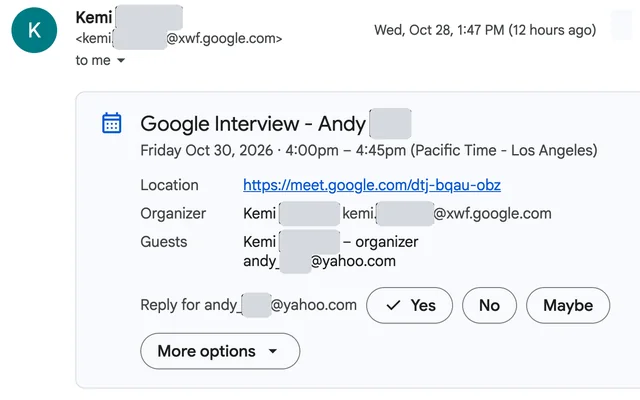
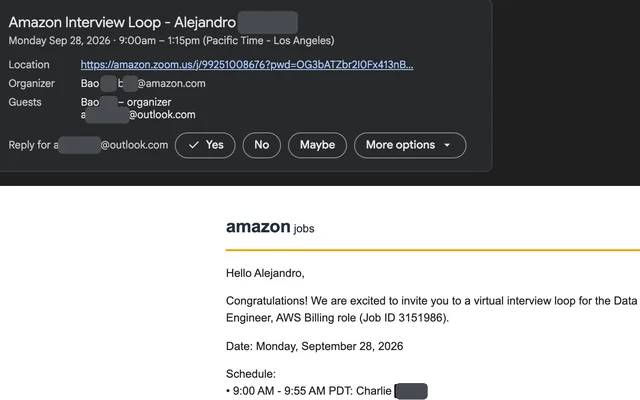
Real interview invites from members' inboxes
See more interview invites →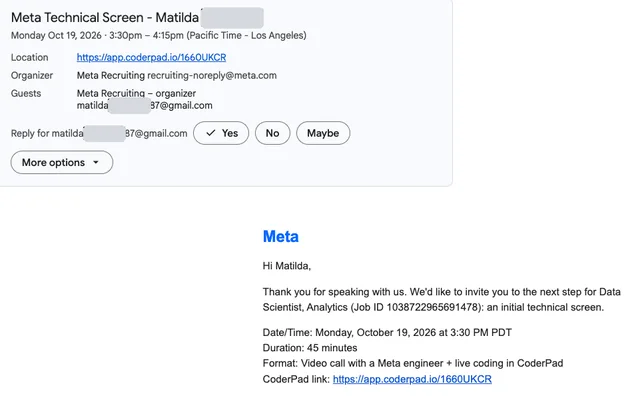
 Meta
 Google
 AWS
Frequently asked questions
What does "authorized to work in the U.S. without sponsorship" mean?
It means you must be able to work for that employer without it filing a visa petition for you. Someone who needs a new H-1B, or an H-1B holder who would need the new employer to file a change-of-employer petition, doesn't meet it. In 8,882 US job ads Applier read in autumn 2026, 146 used the phrase "without sponsorship" and almost all of them were refusals.
What does "now or in the future" mean in a job ad?
It means the employer won't sponsor a visa later either. That closes the role to F-1 students on OPT or STEM OPT who can work today but would need an H-1B when their OPT ends. The phrase appeared in 159 of the 8,882 US job ads Applier read, and the same words are in the standard application-form question.
What does "H-1B transfer only" mean?
The employer will hire someone who already holds H-1B status and file the change-of-employer petition, but it won't file a petition for someone who has never held one. In Applier's sample, 75 of 8,882 ads took this position, and 12 employers posted all of them.
Does "we participate in E-Verify" mean the employer sponsors visas?
No. E-Verify is a system for confirming that a new hire may work in the United States. About three in four ads that mentioned it said nothing else about visas. It does matter for STEM OPT, because USCIS requires the employer to be enrolled in E-Verify for the 24-month extension.
Can a job ad say "U.S. citizens only"?
Only where a law, regulation, executive order or government contract requires it. The Department of Justice tells job advertisers to avoid wording such as "Only U.S. Citizens" or "H-1Bs Only" unless it is legally required. The law it enforces protects US citizens and nationals, recent permanent residents, refugees and asylees from citizenship-status discrimination.
Sources
- Best Practices for Recruiting and Hiring Workers, U.S. Department of Justice, Civil Rights Division, 2023
- Technical assistance letter on pre-employment questions about work authorization (September 9, 2022), U.S. Department of Justice, Immigrant and Employee Rights Section, 2022
- H-1B Specialty Occupations, U.S. Citizenship and Immigration Services, 2026
- Optional Practical Training (OPT) for F-1 Students, U.S. Citizenship and Immigration Services, 2026
- Optional Practical Training Extension for STEM Students (STEM OPT), U.S. Citizenship and Immigration Services, 2026
- Employment Authorization Document, U.S. Citizenship and Immigration Services, 2025
- TN USMCA Professionals, U.S. Citizenship and Immigration Services, 2025