How to find the hiring manager on LinkedIn (and when to email instead)
Start on the job's own page: if the poster has shown themselves, LinkedIn lists them under Meet the hiring team. If they haven't, search the company's people for the title the role reports to. Once you have a name, decide whether to message them on LinkedIn or email them, and for most cold outreach the answer is email.
Where LinkedIn shows the hiring team
LinkedIn's help page on social hiring explains that when you open a job's details page, you may see a Meet the Hiring Team section, and that you can connect with and message everyone listed, including the job poster. It also describes a Hiring in your network filter that shows jobs posted by your connections, and says you may need to expand your network to get the most from it (LinkedIn Help, checked November 2026).
The catch is that this section is opt-in. LinkedIn's page for job posters says a poster's profile appears there only when they add the #Hiring frame to their profile picture and attach the job, and that a poster who opts out of the frame won't appear on the job page (LinkedIn Help). So a missing section tells you nothing about who is hiring; it tells you the poster didn't use the frame.
Five places to look, from least to most effort
1. The job page itself
Check the Meet the hiring team section, then read the description for a reporting line ("reports to the Director of Operations") or a named recruiter. Write down the exact title and team; you'll use both below.
2. Jobs your network is posting
Use the Hiring in your network filter when you search jobs. A role posted by a connection, or a connection's connection, comes with a route to a human that no cold email has.
3. The company page's People tab
Open the company page, choose People and search within it for the function the role belongs to. This shows employees who list the company as current, which is what you want.
4. A people search with filters
LinkedIn's help page on searching for people lists the filters available under All filters, including Current company, Locations, Degree of connections, Connections of, Past company and Keywords, and notes that Actively hiring is a Premium filter. It also describes a natural-language search, such as a role at a company in a city, which doesn't support quotes; if you prefer exact keyword matching, it says to use Boolean search instead (LinkedIn Help).
Search for the title one or two levels above the role, for example "head of design" for a senior designer, with the employer under Current company. Open two or three profiles and check each person's start date and team.
5. Posts, not profiles
Hiring managers often post about openings in their own feed. Search the exact job title with "hiring". A person writing "we're growing the team" is both the right contact and already expecting messages.
Message on LinkedIn or email?
LinkedIn's help page says the actions available on someone's profile, such as Connect or Follow, depend on their settings. Messaging a stranger is the harder part: LinkedIn's InMail page says InMail credits are a Premium feature that lets you message members you aren't connected to, that new credits arrive each billing cycle, and that no plan offers unlimited credits, though you get a credit back when the recipient accepts your message (LinkedIn Help).
| Situation | Best channel | Why |
|---|---|---|
| You share a connection or company with them | LinkedIn message or an introduction | The shared context does the work |
| They posted the job and are listed under Meet the hiring team | LinkedIn message, kept to two lines | They opted in to being contacted about this role |
| No connection, no Premium credits | A connection request note is short and easy to ignore | |
| You want to attach a resume or follow up in the same thread | Attachments and threads are what email is for | |
| You've already applied | Email, then LinkedIn if no reply | Your note sits next to your application |
If you do email, you need an address. LinkedIn doesn't hand it over: its page for job posters says a poster's contact information and email address aren't shown to candidates, whichever visibility option they pick. The guide to finding a hiring manager's email address covers patterns and verification, and the email format finder lists the likely addresses for a name and domain.
A caution about LinkedIn automation
Many tools that find emails or apply to jobs run as browser extensions on LinkedIn. LinkedIn says it doesn't permit third-party software, including browser plug-ins and extensions, that scrapes, modifies the appearance of or automates activity on its site, and that members who use such tools risk having their accounts restricted or shut down (LinkedIn Help). That matters most for auto-apply and messaging bots. Read that page before you install anything that touches LinkedIn, because it's your account at stake.
Applier Reach is a Chrome extension that finds the hiring manager for the job you're viewing, on LinkedIn Jobs and on employer and applicant tracking system pages such as Greenhouse, Lever, Ashby, Workday and SmartRecruiters. It reads the job when you open it, reveals a work email and drafts your introduction from your resume. It never applies, messages or automates anything on LinkedIn, and LinkedIn hasn't endorsed it. It's free for 5 reveals a month. Our comparison of hiring manager email finders covers the alternatives and what each costs.
Check you have the right person
A profile that looks right can still be wrong. Before you write, confirm that the title is the one the job reports to or one level above, that the profile shows the company as current, and that the team matches the vacancy. At a large company two or three people may fit; pick the likelier one and name the role in your first line so it can be forwarded. If the choice is between the manager and a recruiter, this guide to who to contact helps you choose.
What to write
Whichever channel you use, keep it short: the role you applied for, one sentence on why you fit, and an easy way to reply. On LinkedIn, that's two or three lines. By email, our hiring manager email templates give you an introduction and two follow-ups, subject lines cover the first thing they see, and the follow-up date calculator sets your schedule. Apply through the employer's form first: contact is an addition to your application, not a replacement for it.
When you can't find anyone
Some companies are too small to have a LinkedIn presence, and some are so large that fifty people share the title. Contact the recruiter named in the ad, ask someone who works there who runs the team, or apply anyway. We apply on the employer's own site, then email people on the hiring team from your Gmail. You skip the search for every application.
Related guides
- How to find a hiring manager and their email address (2026)
- Best hiring manager email finders for job seekers (2026)
- Hiring manager or recruiter: who to contact after you apply
- Should you email the hiring manager after applying?
Real interview invites from members' inboxes
See more interview invites →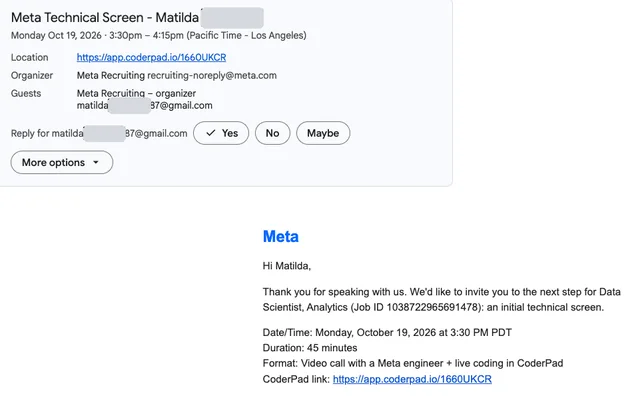
 Meta
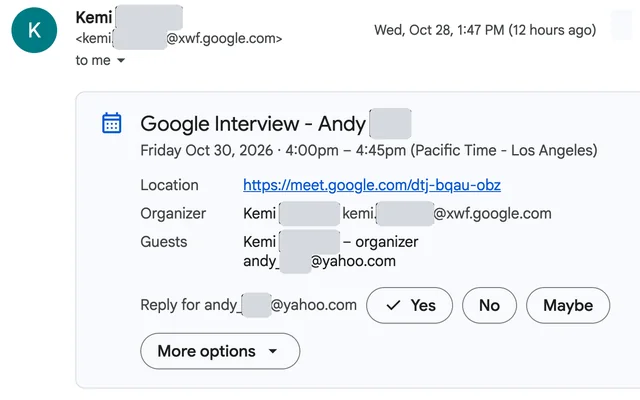
 Google
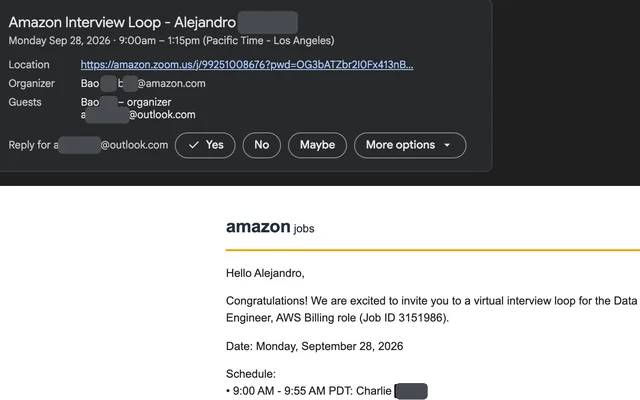
 AWS
Frequently asked questions
How do I find the hiring manager for a job on LinkedIn?
Open the job page and look for the Meet the hiring team section. If it is missing, search the company's people for the title the role reports to, using the Current company filter, and check each profile's start date and team.
Why is there no Meet the hiring team section on some jobs?
LinkedIn's help pages say a poster appears there only if they add the #Hiring frame to their profile picture and attach the job, so a missing section means the poster didn't use it, not that no one is hiring.
Can you message a hiring manager on LinkedIn for free?
You can message connections for free. For people you aren't connected to, LinkedIn's InMail is a Premium feature with a monthly credit allowance, though people listed under Meet the hiring team can be messaged from the job page. Email avoids the credit limit.
Is it safe to use a browser extension on LinkedIn?
LinkedIn says it doesn't permit third-party extensions that scrape, modify the appearance of or automate activity on its site, and that members risk restricted accounts if they use them. Read its page on prohibited software before installing one.
Sources
- Jobs through social hiring, LinkedIn Help, 2026
- Control your visibility to candidates, LinkedIn Help, 2026
- Search for people on LinkedIn, LinkedIn Help, 2026
- View your total available InMail Message credits, LinkedIn Help, 2026
- Prohibited software and extensions, LinkedIn Help, 2026